

Born in Battipaglia (Salerno) in ’54, I moved to Genoa in ’68 and, after wandering between Rome and Milan, I reached Tuscany in 1980, where I still live. Colour and painting: I have always had ties with artists and with the world of art, its history and its museums. This condition has awakened in me a strong interest in artistic language.
In 2001, with friends, I opened a gallery in Prato and, a few years later, inspired more and more by the wonders and emotions provoked by works of extraordinary beauty, I decided, through intuitions, to get involved. To be part of it, and in turn transmit on canvas those sensations I felt and feel, reading and extracting from the pages of life, where joys and sorrows mark the passing of time, those compositions, those colours which, even if for a moment, can capture the attention and transport us to a different world, sometimes dreamlike, where the sensations can be multiple: open works, which do not contain static visions, but which give space to more interpretations and sensations.
The path I have undertaken through the study of colour, which contains a great strength in itself, has meant that through fragmentation that force, that dynamism can free itself and manifest in its essence all its energy, all its light!
Chromatic fragmentation
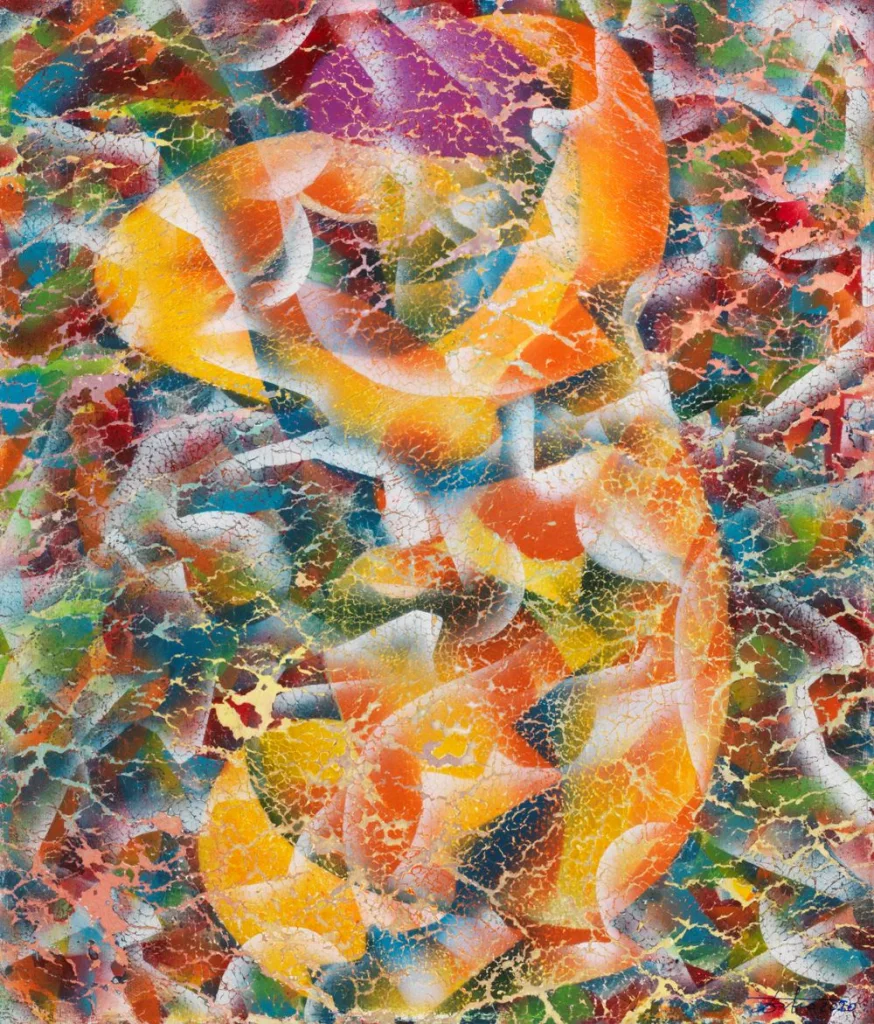
Patrizio Landolfi began his experimental research in the early eighties by retracing some of the artistic paths from the Renaissance to today, taking inspiration in particular from the great themes crossed in the twentieth century.
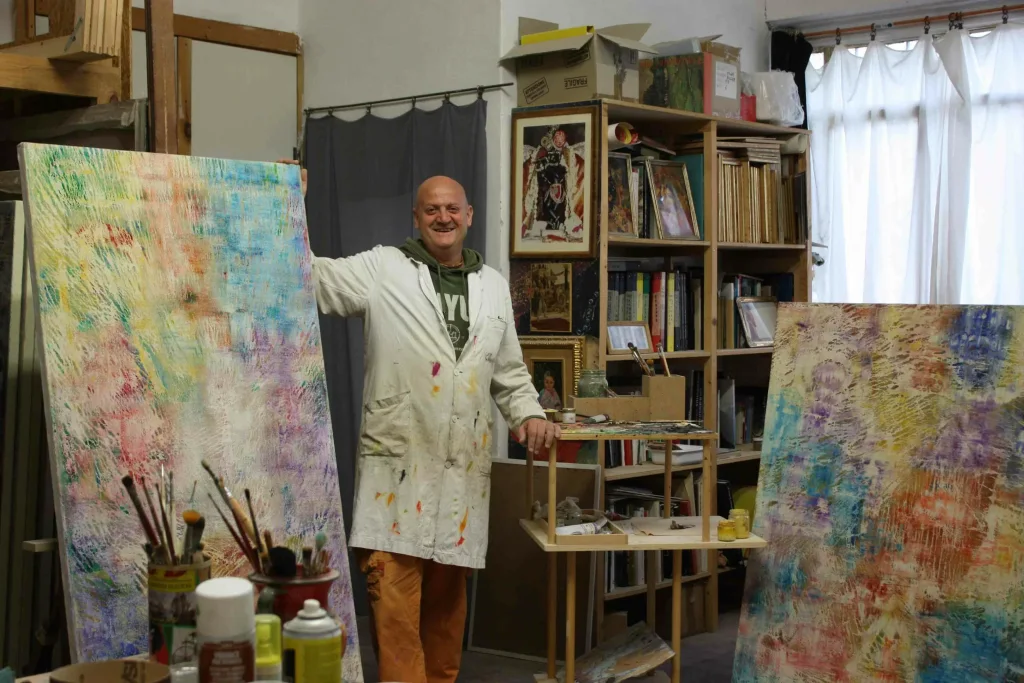
Abstractionism is the language he favours. The freedom of expression and the ability to move without limits of time and space led him to cross the frontier of the finite, fragmenting the composition of his subjects. The artist works in layers that finally manifest themselves as mosaics made through a particularly wide palette. The fragments are often crossed by channels that enrich the works with a three-dimensional aspect. The enchantment of colour also reveals truths hidden at first glance.
Veronica Caciolli, art historian
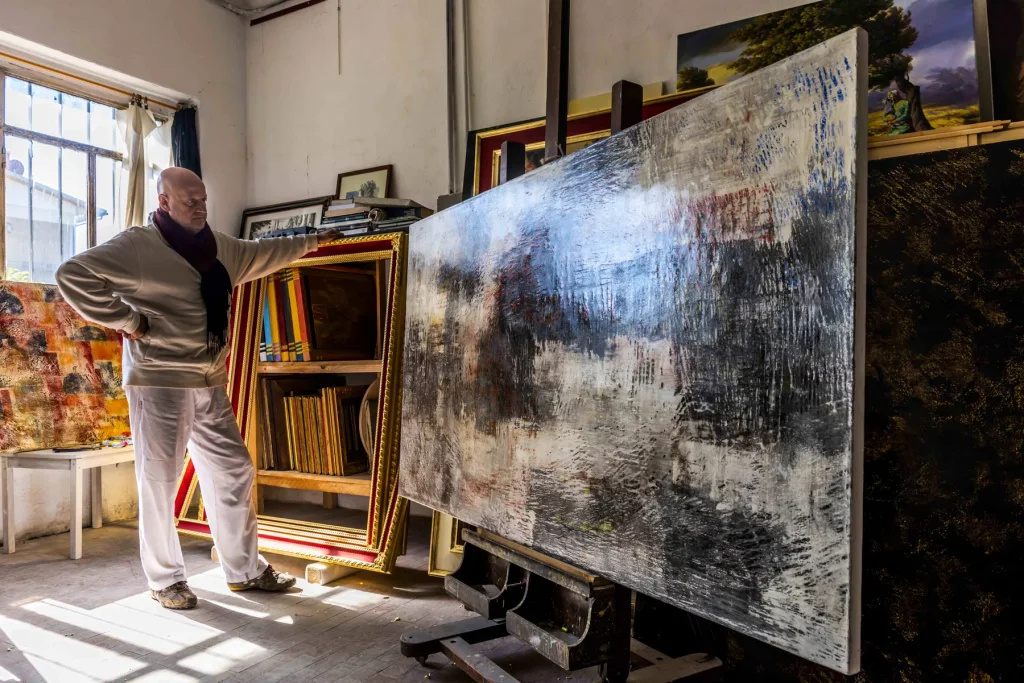
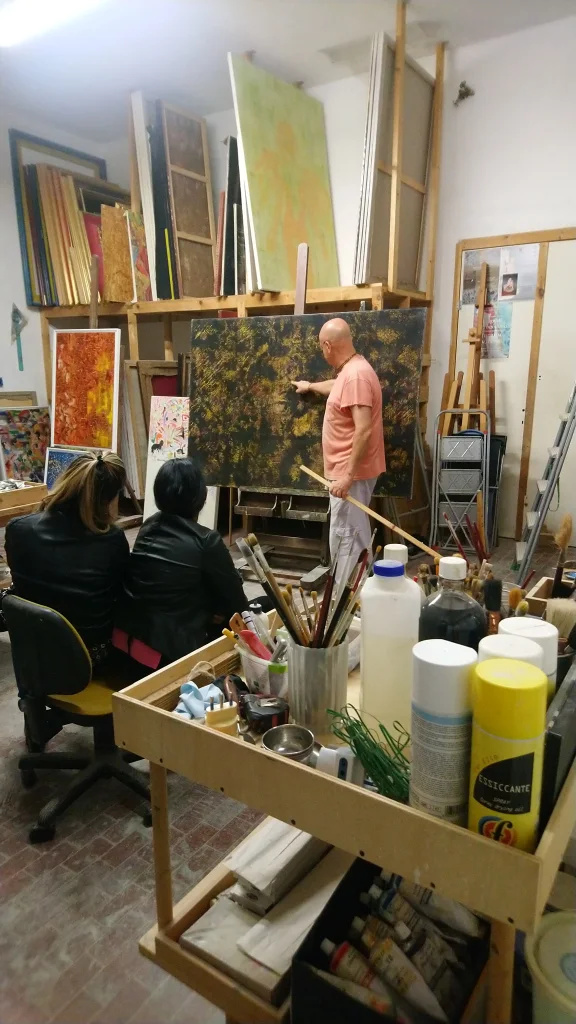
At the studio

The critics
Each fragment is at once the instant that ends a life and the moment in which a life begins; it is instinct and reason.
Caterina Pacenti
Abstractionism is the language he favours. The freedom of expression and the ability to move without limits of time and space led him to cross the frontier of the finite.
Veronica Caciolli, art historian
Your paintings exalt matter, consumed by time […] a message of universal eternity, common to all cultures.
William Tode
Canvases that strike the viewer for their freshness and essentiality.
Adnkronos, 2006